
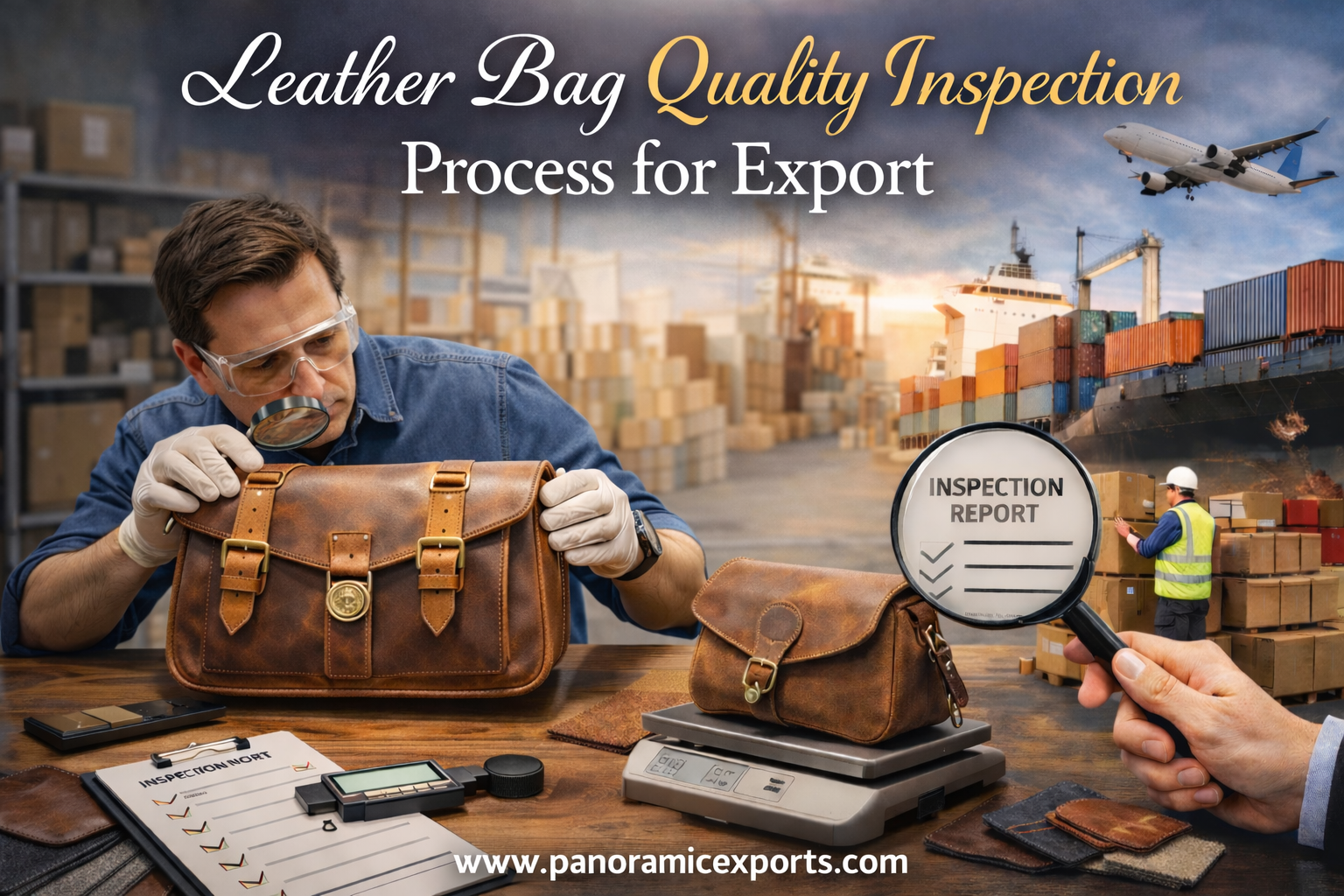
Leather Bag Quality Inspection Process for Export
The competitive global market is not to be conquered by high-quality materials alone; it must be supported by a strict Leather Bag Quality Inspection system. For exporters to the USA, UK, EU, Canada and Australia, product approval depends on durability, safety, craftsmanship precision and compliance documentation. A small mistake—like loose stitching, uneven edge paint, or restricted chemical content—can result in rejected shipments, refunds, or long-term brand damage.
By 2026, global buyers will require manufacturers to move beyond basic visual inspections and adopt a structured leather bag QC checklist that includes raw material inspection, workmanship monitoring, functionality testing, compliance validation and packaging integrity checks. A professional leather bag quality inspection system ensures that every bag shipped is uniform, compliant and export-approved.
The Ultimate Leather Bag QC Checklist: A Step-By-Step Guide
A systematic Leather Bag Quality Inspection process is divided into structured operational stages. A standardized leather bag QC checklist enables exporters to detect defects early, reduce production loss and maintain consistency in high-volume shipments.
1. Pre-Production Inspection (PPI)
This process begins with raw material verification and sample approval before bulk manufacturing starts.
Key PPI Checkpoints:
- Leather Grading & Thickness
Inspectors measure thickness in millimeters, verify grain consistency and match color to approved “Golden Samples.” Natural scars, insect bites, or deep wrinkles must remain within acceptable tolerance limits. - Moisture Content Testing
Leather must maintain balanced moisture levels to prevent cracking or mold formation during sea transport. - Hardware Resilience
Zippers, buckles, rivets and D-rings must be non-ferrous and corrosion-resistant. Salt spray testing verifies rust resistance. - Lining & Adhesives
Inspect bonding strength and confirm adhesives meet international safety standards.
At this stage of leather bag quality inspection, expensive production rework is minimized and technical clarity is ensured between buyer and manufacturer.
2. Inline Inspection (DUPRO)
During production, Leather Bag Quality Inspection shifts to assembly-line monitoring of craftsmanship. Inline inspection prevents cumulative defect build-up across entire batches.
Workmanship Control Areas:
- Stitch Density Standardization
Maintain 7–9 stitches per inch (SPI) to ensure seam strength and aesthetic balance. - Panel Alignment & Symmetry
Pockets, zippers, handles and logos must align precisely to avoid structural imbalance. - Edge Paint Consistency
Inspect smoothness and uniform coating without cracks or uneven application.
Inspectors use a structured leather bag QC checklist to record defects in real time, allowing immediate corrective action.
3. Final Random Inspection (FRI)
Final Random Inspection is the most critical stage of Leather Bag Quality Inspection before shipment.
When production is 100% complete and at least 80% packed, inspectors apply the AQL (Acceptance Quality Limit) sampling method.
Final Audit Includes:
- Visual & Surface Review
Examine scratches, stains, loose threads and surface inconsistencies. - Functional Testing
Zippers must complete 20+ pull cycles. Magnetic snaps and buckles must operate smoothly without stiffness. - Load Stress Test
The bag is filled to its maximum rated capacity and suspended for 4 hours to test seam strength and handle durability. - Rub & Smell Test
A rub test checks for dye transfer, while a smell test detects chemical over-treatment or mold contamination.
All checkpoints are documented in the leather bag QC checklist to provide objective shipment approval data.
2026 Global Standards and Compliance
Modern leather bag quality inspection cannot be separated from regulatory compliance.
Chemical Safety (REACH & CPSIA)
Export leather bags must comply with:
-
Chromium VI limit (≤ 3mg/kg)
-
Lead content restrictions
-
Prohibited azo dyes
-
Phthalate limitations
Exporters may consult the European Chemicals Agency (ECHA) to understand REACH obligations and restricted substance limits:
Compliance verification during leather bag quality inspection prevents customs delays and penalties.
Packaging and Transit Protection
Leather Bag Quality Inspection must include packaging integrity for sea and air shipments.
Inspectors verify:
-
Five-ply or seven-ply export cartons
-
Silica gel moisture absorbers
-
Proper dust bag quality
-
Barcode accuracy
-
Carton drop resistance
Poor packaging can damage premium leather during transit, leading to retailer complaints and returns.
Defects in Leather Bag Quality Inspection
Professional reports classify defects as:
- Critical Defects
Hazardous flaws such as sharp edges, needle fragments in lining, or chemical non-compliance. - Major Defects
Structural issues like broken zippers, uneven stitching, or seam slippage. - Minor Defects
Cosmetic imperfections such as slight color variation or minor surface wrinkles.
Inspectors use a structured leather bag QC checklist to assign defect levels based on AQL standards and determine pass or fail status.
Documentation and Reporting Structure
A professional quality inspection report includes:
-
Factory name and inspection location
-
Total production quantity
-
AQL sampling size
-
Defect classification summary
-
Photographic evidence
-
Corrective action notes
-
Final shipment recommendation
Buyers require transparent documentation before releasing final payments.
A well-designed leather bag QC checklist ensures traceable accountability and builds buyer confidence.
Why Leather Bag Quality Inspection Determines Export Success
Exporters who do not implement a professional bag quality inspection system face higher risks of:
-
Container rejection
-
Financial penalties
-
Marketplace suspension
-
Increased returns
-
Brand reputation loss
By adopting a detailed leather bag QC checklist, manufacturers align Indian craftsmanship with global performance standards.
Quality consistency is not accidental; it is structured and measurable.
Panoramic Exports: Your On-Ground Quality Assurance Partner
At Panoramic Exports, we treat Leather Bag Quality Inspection as a strategic safeguard, not a procedural formality. We combine international buyer specifications with real-time factory supervision.
Each leather bag QC checklist is customized according to:
-
Market-specific regulations
-
Retailer brand standards
-
Private label requirements
-
Packaging expectations
-
Shipment timelines
Within 24 hours of inspection, clients receive a detailed report with high-resolution images and AQL evaluation results.
From handcrafted clutches to large-scale office messenger shipments, our quality inspection system ensures global compliance and brand protection.
Conclusion
A structured Leather Bag Quality Inspection process is the foundation of a reliable export business. From raw leather verification to final packaging audits, every stage contributes to shipment integrity and customer satisfaction.
By following a comprehensive leather bag QC checklist and staying updated on global compliance standards, exporters can confidently meet international expectations in 2026 and beyond.
Quality is not a one-time action. It is a disciplined system that begins with material selection and ends with consumer trust.