
Feb 7, 2026
Why Sustainable Tote Bags Are In Demand
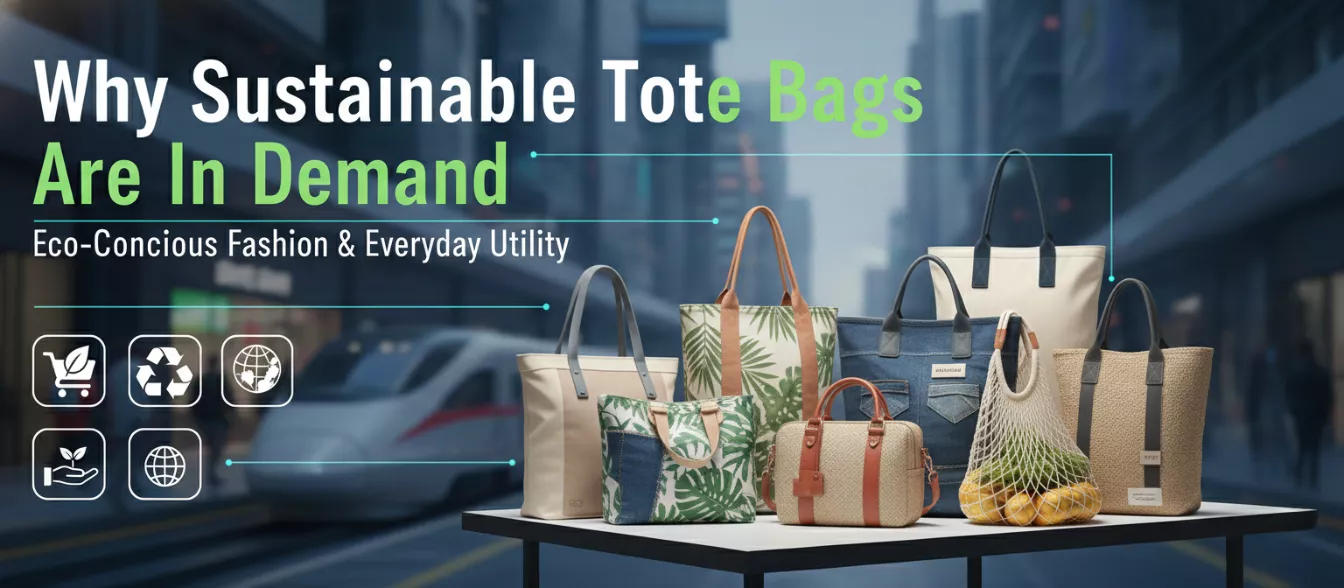
Why Sustainable Tote Bags Are In Demand
Environmental Responsibility Reshaping Retail
The global transition toward environmental responsibility has fundamentally altered the retail landscape. What was once a niche alternative has become a primary accessory for the modern traveler, shopper, and professional. Sustainable tote bags now occupy a central position in this shift, offering a practical and repeat-use solution to the growing problem of single-use plastics.
As environmental awareness becomes embedded in everyday purchasing behavior, consumers increasingly expect even utilitarian products to reflect responsible choices. Carry solutions are used frequently and in public, making them one of the most visible categories through which individuals and brands can demonstrate commitment to waste reduction. This visibility has accelerated adoption and positioned sustainable tote bags as everyday essentials rather than optional add-ons.
Strategic Importance for USA-Focused Brands
For businesses, designers, and exporters targeting the USA market, understanding why sustainable tote bags are in demand is essential for staying competitive in fashion, lifestyle, and private-label sourcing environments. American buyers pay close attention to material transparency, ethical sourcing, and long-term usability. As a result, reusable fabric carriers often act as an entry product through which brands establish sustainability credibility quickly.
The Strategic Rise of Eco-Friendly Accessories
From Trend-Based Buying to Structural Demand
The surge in demand for the eco tote bag is not a temporary fashion movement. It reflects a structural change in consumer priorities toward products that combine environmental responsibility with everyday practicality. Over time, sustainable tote bags have moved from novelty items into expected retail standards.
Early adoption was driven by environmentally conscious consumers. Today, mainstream buyers expect reusable options by default, especially in urban and suburban markets where sustainability messaging is reinforced by policy and retail practice.
Sustainability Becoming Habitual
Across North America, particularly in major U.S. metropolitan areas, sustainability has shifted from awareness into habitual purchasing behavior. Consumers now expect carry solutions that reduce waste, last longer, and align with ethical manufacturing values. This normalization has removed barriers to adoption and reinforced the idea that sustainable tote bags are the default choice rather than a premium alternative.
Multi-Use Versatility as a Core Advantage
This behavioral shift has repositioned reusable fabric carriers from secondary add-ons into core lifestyle items. The versatility of a responsibly made bag allows it to serve multiple roles—from grocery shopping and gym use to professional commuting—reinforcing why sustainable tote bags consistently outperform disposable and low-quality alternatives.
The Impact of Legislative Shifts
Plastic Bag Regulations Creating Permanent Demand
One of the strongest accelerators behind demand growth has been legislation. Several states and cities across the USA have introduced bans, levies, or restrictions on single-use plastic bags, permanently reshaping retail operations and consumer expectations. These policies have made sustainable tote bags a necessity rather than a choice.
According to data published by the U.S. Environmental Protection Agency, plastic pollution remains a major environmental challenge, which is why reusable alternatives are increasingly encouraged across U.S. retail and policy frameworks.
Compliance and Durability Requirements
Regulation alone did not guarantee success. Early substitutes often failed due to poor construction or limited lifespan, prompting the market to favor sturdier fabric-based solutions designed for long-term use. Durability quickly became a defining requirement, especially in high-traffic urban environments.
From Situational Use to Daily Essential
Unlike disposable bags, a well-constructed carrier is designed for hundreds of usage cycles. This durability transforms sustainable tote bags into household essentials rather than situational purchases, ensuring consistent demand and long-term relevance in regulated markets.
Alignment with Corporate Values
Sustainability as Brand Identity
For global brands and retailers, offering reusable carry products has become a strategic branding decision rather than a purely operational one. A responsibly produced bag serves as a visible representation of corporate values, particularly in public settings.
Visibility and Long-Term Brand Recall
Reusable carriers circulate for months or years, providing repeated brand exposure. Compared with single-use packaging, sustainable tote bags deliver significantly higher long-term recall and marketing ROI, especially for brands focused on ESG-aligned growth.
Corporate Gifting and Retail Integration
Many companies now integrate cotton tote bags into retail packaging, trade events, and corporate gifting. This approach reduces packaging waste while adding perceived value for customers and aligning with sustainability reporting goals.
Consumer Psychology: The Ethics of the USA Market
The Rise of the Conscious Consumer
Demand for responsible accessories is strongly influenced by consumer psychology. In the United States, the “conscious consumer” has become a dominant segment rather than a niche audience.
Value Alignment in Purchasing Decisions
Purchasing decisions are increasingly driven by alignment with personal values related to climate responsibility, ethical labor, and waste reduction. This shift directly supports demand for sustainable tote bags in both consumer and B2B markets.
The Social Signal of Reusable Accessories
Carrying an eco tote bag has become a subtle social signal. It communicates awareness, responsibility, and preference for quality over disposability—an effect often described as eco-prestige among urban professionals.
Material Excellence: Beyond Traditional Fabrics
Material Transparency Driving Buyer Trust
Material choice plays a central role in buyer confidence. Consumers increasingly evaluate fiber origin, sourcing practices, and lifecycle impact, strengthening demand for well-documented sustainable tote bags.
1. The Dominance of Organic Cotton
Why Cotton Remains the Benchmark
Cotton tote bags remain the industry benchmark due to strength, breathability, and biodegradability.
Benefits of Organic Cultivation
Organic cotton supports healthier soil, reduced chemical runoff, and safer farming conditions.
Longevity and Reusability
High-quality organic versions are washable, repairable, and engineered for extended use, lowering environmental impact per use over time.
2. High-Performance Bio-Based Fibers
Hemp and Jute for Structural Strength
Low water use and high tensile strength make these fibers suitable for rugged, durable designs.
Recycled PET for Travel Applications
Recycled PET fabrics offer durability and moisture resistance, ideal for travel-focused use.
Recycled Cotton and Waste Reduction
Recycled cotton reduces textile waste and reliance on virgin fiber extraction, supporting circular production models.
Industrial Resilience and Load-Bearing Engineering
Engineering for Daily Professional Use
Durability is non-negotiable in the USA market. Modern fabric carriers feature reinforced stitching, structured bases, and stress-tested handles to withstand daily use.
Load Capacity and Structural Design
Heavy-gauge canvas allows premium designs to carry 10–15 kg, accommodating laptops, documents, and daily essentials without deformation.
Sustainability Through Longevity
Products built to last reduce replacement frequency, one of the most effective ways to lower overall material consumption and reinforce the value of sustainable tote bags.
Why Sustainable Totes Appeal to Global Exporters
High Value-to-Weight Advantage
From an export standpoint, sustainable tote bags offer an attractive balance of low shipping weight and high perceived value, making them efficient for large-volume international shipments.
Consistent Demand Across USA and Europe
Stable demand in regulated Western markets ensures predictable ordering cycles and scalability for exporters supplying sustainable totes to retail and corporate buyers.
Compliance with International Standards
Role of Certifications
Standards such as GOTS and GRS verify fiber integrity, chemical safety, and ethical production.
Retail Acceptance and Margin Protection
Certified sustainable tote bags face fewer compliance barriers and achieve easier placement in premium retail environments.
Customization and Boutique Appeal
Design Simplicity Supporting Branding
Clean silhouettes support embroidery, printing, and low-impact dye customization without compromising durability.
Preferred Choice for Premium Retail
This flexibility makes sustainable tote bags suitable for boutique collections, event merchandising, and corporate campaigns across the USA.
Aesthetic Trends: Functional Minimalism
Quiet Luxury Influencing Accessories
Neutral colors, natural textures, and understated branding dominate current accessory preferences.
Office-to-Travel Versatility
Modern eco tote bag designs transition seamlessly between professional settings and travel environments, reducing the need for multiple bags.
The Role of Sustainable Totes in Circular Fashion
Contribution to Circular Economy Models
Reusable carriers support circular principles by remaining in use longer and reducing reliance on disposable packaging. Sustainable tote bags align naturally with this long-life consumption model.
End-of-Life Advantages
Single-origin natural fibers are easier to recycle or compost, increasing appeal among forward-thinking retailers and environmentally conscious buyers.
Panoramic Exports: A Leader in Ethical Manufacturing
Experience and Global Market Reach
Panoramic Exports brings over 25 years of experience supplying export-ready fabric carriers to global buyers.
Ethical Compliance and Production Standards
Operating under SEDEX-audited systems, the company integrates ethical labor practices with scalable manufacturing processes.
Reliability for USA Buyers
Their expertise in durable cotton-based manufacturing supports consistent quality and compliance for sustainable tote bags supplied to the U.S. market.
Strategic Procurement Principles
-
Material Certifications: GOTS / GRS
-
Fabric Strength: 12oz–16oz canvas
-
Ethical Audits: SEDEX / BSCI
-
Dye Safety: Low-impact processes
Conclusion
The continued demand for responsibly made carry solutions reflects a permanent shift toward thoughtful consumption. By choosing durable, ethically produced options, consumers and businesses invest in products that balance function, values, and environmental care. As the USA market continues to prioritize transparency and longevity, sustainable tote bags will remain a core pillar of modern retail and export strategies rather than a passing trend.
FAQs
1. Why are reusable fabric tote bags replacing plastic bags in the USA?
Reusable fabric totes are replacing plastic bags due to state-level plastic bans, growing environmental awareness, and consumer demand for longer-lasting alternatives. Unlike single-use plastic, fabric carriers can be reused hundreds of times, making them both practical and regulation-compliant.
2. What makes a tote bag environmentally responsible?
A tote bag is considered environmentally responsible when it is made from renewable or recycled materials, produced using ethical labor practices, and designed for long-term use. Durability is a critical factor, as extended product life significantly reduces overall environmental impact.
3. Why do retailers prefer fabric totes for branding and packaging?
Retailers prefer fabric totes because they provide long-term brand visibility. Unlike disposable packaging, a reusable carrier continues to circulate in public spaces, offering repeated exposure while reinforcing the brand’s sustainability positioning.
4. Are cotton-based tote bags strong enough for daily and professional use?
Yes. When manufactured with heavy canvas (typically 12oz–16oz) and reinforced stitching, cotton-based totes can comfortably carry laptops, documents, groceries, and travel essentials without structural failure.
5. Is demand for eco-friendly tote bags a long-term trend?
Demand is structural rather than trend-driven. Environmental regulations, ESG commitments, and changing consumer behavior indicate sustained growth, especially in the USA and European markets where reusable products are becoming the default choice.