
Feb 17, 2026
How to Make a Beaded Bag
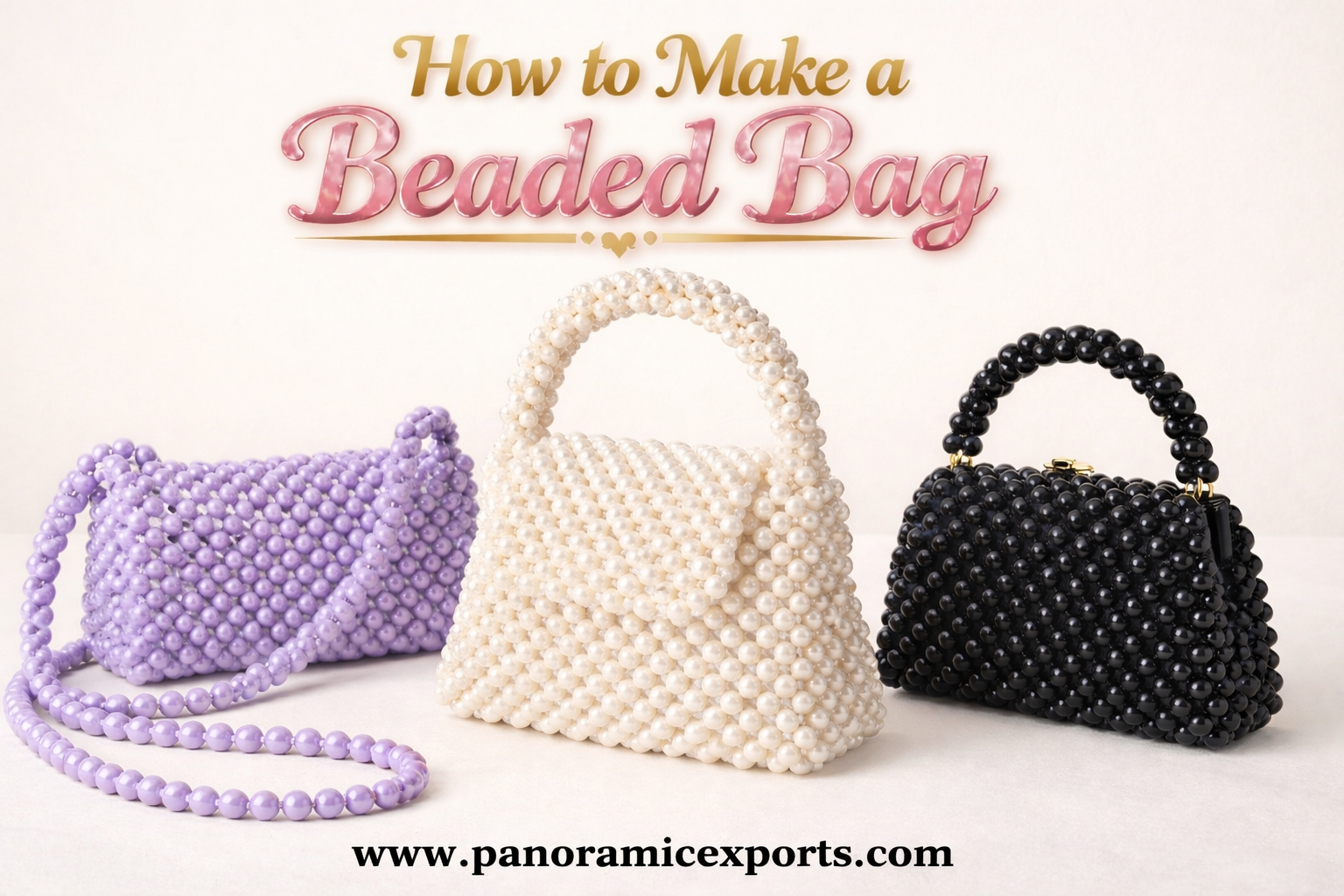
How to Make a Beaded Bag
To learn how to make a handcrafted bag on a professional level one must do more than be a creative person, he or she must find structure, be able to reason and design and he or she needs to discipline materials. A Beaded Bag is an accessory and technical object at the same time. Each bead brings beauty and consequently weight, tension and structural stress. When done correctly, it can spell out a luxury item that will help merge craftsmanship and longevity. This guide describes the approach that professional makers use when undertaking production such that the end product is not only aesthetically perfect, but also commercially trustworthy.
A bag that is professionally made should have both aesthetics and load bearing capability. The distinction between amateurish work and professional work is the precision, repeatability and discipline of finishing.
The Basics of Making a Beaded Bag of high quality
A luxury bag starts with preparation. Prior to the beginning of stitching, professional artisans determine structure, materials and workflow. Beadwork is treated in high-end production as architecture: each layer develops the next one.
Core essentials include:
- Accurate pattern drafting
- Reinforced structural base
- Uniform bead sizing
- Industrial-strength thread
- Stress-tested handles
- Protected interior lining
Failure to use the planning base results in hanging, torn threads, or irregular floors.
1. Which Materials to Use in Your Beaded Bag Project? Premium Materials
The quality of the material that you use on your Beaded Bag is what keeps your bag alive in your day to day life. There is no compromise on thread or bead consistency among the professionals. The low-priced materials undermine the whole construction.
Recommended materials:
- Precision-cut seed beads
- Durability glass beads that are tempered.
- Polyester or nylon thread bonded or heavy.
- Industrial beading needles
- Fabric backing (reinforced) or mesh.
- Durable lining fabric
Every part should be able to sustain tension in the long run without straining.
2. The Knowledge of the Bead Varieties: Glass, Acrylic and Resin
The different bead materials have an influence on the performance and weight. A business Beaded bag should be a compromise between glamour and safety.
Glass beads are better in finish and scratch resistance. Acrylic beads weigh much less and can be used in bigger bags. Creative shapes with reduced overall load are made possible by resin beads. Maker professionals measure the edge of the beads in order to avoid the abrasion of the threads.
Learning the behavior of beads will avoid premature wear.
Step-by-Step Technical Process: The Beaded Bag-making
The production process is carried out in a rigid order to have symmetry and structure balance. Accuracy means that one can recreate any bag.
1. Pattern and Architectural Blueprint Design
The engineering stage is pattern drafting. All Beaded Bags are grid-mapped by professionals to stay aligned. Patterns are coded into counts of stitches and thickness of beads.
Key planning steps:
- Draft front and back panels
- Map bead placement
- Calculate tension zones
- Identify seam reinforcement areas.
- Plan closure positioning
A blue print does away with guess work in construction.
2. Preparation of the Foundation: Selecting Auditory Thread and Needle
Durability is determined by the choice of the thread. Professional Beaded bag uses thread that is rated at tension resistance. The needle has to go through beads and not making holes bigger.
Preparation includes:
- Double-thread reinforcement
- Tension testing
- Size of needles equal to bead diameter.
- Knotting anchors within structural areas.
The establishment of the foundation keeps off long-term wear.
Developed Construction Systems of a long life Beaded Bag
Commercial beadwork is based on developed techniques of stitching, which evenly distribute the weight. These processes isolate decorative craft and the level of production of an industry.
1. The Matting Method: Base and Body Building
The matting technique is a weaved bead surface, which acts as fabric. The beads have a hook-like shape that fits into their respective rows to create a sheet that is stable. A Beaded Bag that is made by using this method does not stretch and deform.
Advantages include:
- Even load distribution
- Reduced thread exposure
- Increased flexibility
- Structural uniformity
High-end bags are preferred to be matted.
2. Learn to Work the Handles: Bead Strength to Your Bag
The most prevalent structural problem is handle failure. Professional makers make the handle joints stronger by lining them with a stitch and using support cords that are not seen.
Best practices:
- Triple stitched anchor points.
- Internal cord reinforcement.
- Positioning of balanced weight.
- Stress testing under load
The bag structure is covered by strong handles.
Luxury Beaded Bag Professional Finishing Touches
Finishing defines luxury. A Beaded bag has to appear clean on all sides, both exterior and interior. Soon the loose thread or the uneven lining immediately lowers the perceived value.
1. How to Line Your Beaded Bag to Let it Fall
Bead stitching is covered with lining that prevents friction and wetness. Lining is an aspect handled by professionals as structural support and not decoration.
Lining steps:
- Precision cutting
- Seam folding
- Hidden stitch attachment
- Corner reinforcement
- Interior smoothing
An effective lining will increase life by a long distance.
2. To Find Closures: Magnets and Zippers
Closures should be able to resist repetitive usage. The magnetic snaps are elegant and the zippers are the most secure. Additional reinforcement is applied to the closure area of a Beaded bag so that it cannot rip.
Professional closure installation consists of:
- Load-bearing fabric patches
- Reinforced stitch rings
- Alignment testing
- Frequent check-ups of stress.
The closures must not be crowded.
Why Quality Control is Crucial in the Production of Beaded bags
Quality control is what makes the handmade craft into commercial. All the bags with Beads are to be inspected before they reach the customers.
1. Multidimensional Inspection of Symmetry and Bead Consistency
Professional finish is seen through visual inspection. Makers check:
- Pattern alignment
- Bead spacing uniformity
- Surface smoothness
- Color consistency
- Thread invisibility
Pure trifles become chronic.
2. Experimental Test of the Load Capacity of a Commercial Beaded Bag
The structural safety is assured by the durability test and it should be able to support expected weight.
Testing includes:
- Load simulation
- Handle pull testing
- Seam tension checks
- Closure stress trials
Business dependability needs quantifiable measures.
Global Demand of the Handcrafted Beaded Bag in the year 2026
The luxury handmade is more appreciated by the world market. A Beaded bag is a symbol of slow fashion, craftsmanship and uniqueness. Consumers demand items that have a human touch and not factory-stamped. Handmade accessories are getting more and more prestigious in the international markets as the sustainable fashion is growing.
To understand the history and cultural evolution of beadwork craftsmanship, this overview provides useful context.
The authenticity and tactile artistry are what drives the demand.
Panoramic Exports: Beaded bag manufacturers of quality
Panoramic Exports is a professional manufacturer of beadwork bags serving global fashion markets. Each bag is created through a structured production process that blends traditional bead craftsmanship with export-grade quality control. The company works with skilled artisan clusters to deliver consistency, durability, and refined finishing that meets international buyer expectations.
Manufacturing strengths include:
- Precision bead placement for luxury finish
- Reinforced stitching for durability
- Premium glass and resin bead sourcing
- Industrial-grade thread and lining
- Load-tested handles and closures
- Multi-stage quality inspection
- Custom design and private label capability
- Ethical artisan partnerships
- Export-ready packaging standards
Panoramic Exports combines aesthetics with structural reliability, producing bags that are stylish, durable, and commercially dependable while preserving their handmade character.
Conclusion
The bead bag is professionally designed, so it is a mixture of art and structural accuracy, making it beautiful and durable. Adherence to strict production practices ensures uniform quality that can be offered in the international markets.
FAQs
1. What is the duration of professional production?
Hours per bag 8 to 40 depending on the complexity.
2. Do you always prefer glass beads to acrylic?
Glass is also durable; acrylic is lighter.
3. Does a handmade bag work on a daily basis?
Yes, were made of strengthened contrivance.
4. What causes handle failure?
Lack of sufficient reinforcement and inappropriate thread selection.
5. Is lining mandatory?
For commercial quality, yes.